Saturday, 23 February 2019

The Genetic Information Non-discrimination Act (GINA): Protection from Misuse of Genetic Information

Genetic discrimination happens when individuals are treated in an unexpected way by their manager or insurance company since they have a gene mutation that causes or increases the chance of an inherited disorder. Fear of discrimination may be a common concern among individuals considering hereditary testing. Several laws at the government and state levels offer assistance secure individuals against hereditary discrimination. In specific, a government law called the Genetic Information Non-discrimination Act (GINA) is planned to ensure individuals from this form of discrimination.

GINA has two parts: Title I, which prohibits hereditary discrimination in health insurance, and Title II, which disallows hereditary discrimination in work. Title I makes it illegal for health insurance providers to use or require genetic data to create choices about a person's protections qualification or scope. This portion of the law went into effect on May 21, 2009. Title II makes it illegal for employers to utilize a person's hereditary data when making choices around hiring, promotion, and a few other terms of business. This portion of the law went into effect on November 21, 2009. GINA and other laws don't secure individuals from genetic discrimination in each circumstance. For example, GINA does not apply when an employer has less than 15 employees. It does not cover individuals within the U.S. military or those accepting health benefits through the Veterans Health Organization or Indian Health Service. GINA moreover does not protect against genetic discrimination in forms of insurance other than health insurance, such as life, disability, or long-term care insurance.

The Genetic Data Nondiscrimination Act of 2008 (GINA) federal law that secures people from hereditary discrimination in health insurance and business. Genetic discrimination is the misuse of genetic information. This resource gives an introduction to GINA and its assurances in health insurance and business. It includes answers to common questions and examples to assist you to learn.

What is genetic information and why is it important?

The genetic information ensured by the law includes family health history, the results of genetic tests, the use of genetic counselling and other genetic services, and participation in genetic research.

Sunday, 3 February 2019

Medicinal Food: Nutrigenomics Is Shaping Our Health

Nutrigenomics is a recently developed term in food science, dieting and also in the blockchain. Most of the people have no idea about the nutrigenetics and why it is necessary for living a healthy future. Medical Futurist has decided to show about the nutrigenomics and its benefits for the future.

“It’s in my genes” is something we regularly listen from individuals say when they visit a doctor or giving an introductory wellbeing history. In any case, according to epigenetics and longevity studies, only almost 25% of our general health is affected by our genes.1 Seventy-five percent of the picture is our lifestyle—smoking status, nourishment, development, stress, and sleep.

Nutrigenomics or the study of how nourishment impacts gene expression, examines how what we eat influences our genes’ activity. In other words, the food we eat can affect what proteins genes deliver according to our DNA. We can take caffeine as an example. Numerous individuals can drink caffeine and go to sleep 20 minutes afterward, whereas others cannot drink it after a certain time in the evening. We metabolize differently! Just as some bodies respond differently than the norm to certain foods, how individuals metabolize medications can vary as well. Pharmacogenomics looks at how drugs affect individuals based on how rapidly they metabolize the medicate. Medicine dosages will depend on whether someone is a slow metabolizer or a rapid metabolizer.

With nutrigenomics, as doctors better understand how a patient’s body handles nutrients and supplements, they’ll be able to better predict the impacts of a specific drug or a dosage without having to wait and see how the patient reacts.
The term “Nutrigenomics” is based on several concepts:
  • Genes play a part in disease development and prevention.
  • A poor diet can be a serious risk factor for numerous diseases. Nutrient deficiencies and toxic chemicals in low-quality foods have an effect on human gene expressions.
  • Each individual is distinctive in terms of how much their genes and health are affected by their diet.
A healthy, but also personalized diet can be used to avoid, mitigate, or cure chronic diseases.


Saturday, 19 January 2019

Can Gene Therapy Become The Cure For Blindness?

Patients who had lost their sight to an inherited retinal disease could see well sufficient to explore a maze after being treated with a new gene therapy according to the researchers.
Patients in the study had a condition called Leber innate amaurosis (LCA), which starts in infancy and advances gradually, in the long run causing the total blindness. This new, first-of-its-kind Gene Therapy is right now beneath survey by the U.S. Food and Drug Administration for potential approval.

There is currently no cure available for inherited retinal diseases. Information from the primary randomized, controlled, phase 3 study appeared that 27 of 29 treated patients (93 percent) experienced significant advancements in their vision, enough that they may explore a maze in low to moderate light. They also showed advancement in light sensitivity and peripheral vision, which are two visual deficits these patients experience. Approval could open the door for other gene therapies that might eventually treat the more than 225 hereditary mutations known to cause blindness.

It can be applied to retinitis pigmentosa, another inherited retinal disease caused by a defective gene. Or in the future, gene therapy may possibly give key proteins required to reestablish vision in more common diseases such as age-related macular degeneration.LCA is rare, affecting around 1 in 80,000 people. It can be caused by one or more than 19 different genes. The treatment, called voretigene neparvovec (Luxturna, Spark Therapeutics), includes a genetically adjusted version of a harmless virus. The virus is modified to carry a healthy version of the gene into the retina. Researchers infuse billions of modified viruses into both of a patient's eyes. Treatment doesn't restore typical vision. It does, however, permit patients to see shapes and light, permitting them to get around without a cane or a guide dog.

Till now, there is no evidence about how long the treatment will last, but so far, most patients have maintained their vision for two years. More than 200 patients with LCA have taken an interest in gene therapy trials since 2007. However, no gene therapy has gotten this near to FDA approval for retinal disease or any other eye disease. After all the researches, FDA approved the first ever Gene Therapy which targets Rare form of Genetic Blindness.


Sunday, 13 January 2019

Dwarfism

Dwarfism is a therapeutic or hereditary condition that causes someone to be significantly shorter than an average-sized man or woman. The normal tallness of an adult with dwarfism is 4 feet, but dwarfism may apply to an adult who is 4'10" or shorter. Dwarfism is usually the result of a hereditary transformation. But having a gene or genes responsible for dwarfism can happen in one or two of ways. In a few cases, it can happen suddenly. You may not be born with transformed genes acquired from a parent. Instead, a transformation of your genes happens on its own usually without a cause specialist can discover. Inherited genetic disorders can take two forms. One is recessive, which suggests you acquire two mutated genes (one from each parent) to have the condition. The other is dominant. You simply require one mutated gene from either parent to have the disorder.

Causes
The most common sorts of dwarfism, known as skeletal dysplasias, are hereditary. Skeletal dysplasias are conditions of abnormal bone development that cause disproportionate dwarfism.

Achondroplasia: The most common frame of dwarfism, achondroplasia happens in approximately one out of 26,000 to 40,000 babies and is evident at birth. Individuals with achondroplasia have a generally long trunk and shortened upper parts of their arms and legs.

Spondyloepiphyseal dysplasias (SED): A less common form of dwarfism, SED influences around one in 95,000 babies. Spondyloepiphyseal dysplasia refers to a group of conditions characterized by a shortened trunk, which may not end up apparent until a child is between ages 5 and 10.

Diastrophic dysplasia: A rare form of dwarfism, diastrophic dysplasia happens in around one in 100,000 births. Individuals who have it tend to have shortened lower arms and calves (this is known as mesomelic shortening).

Signs and symptoms —
Proportionate dwarfism
When the head, trunk, and appendages are all proportionate to each other, but much smaller than those of an average-sized person, the condition is known as proportionate dwarfism.

Disproportionate dwarfism
This is the foremost common kind of dwarfism. As the name recommends it’s characterized by having body parts that are unbalanced to each other.

Treatments
Early diagnosis and treatment can prevent or reduce a few of the issues related to dwarfism. Individuals with dwarfism related to growth hormone deficiency can be treated with development hormone. In numerous cases, individuals with dwarfism have orthopedic or therapeutic complications.

Saturday, 5 January 2019

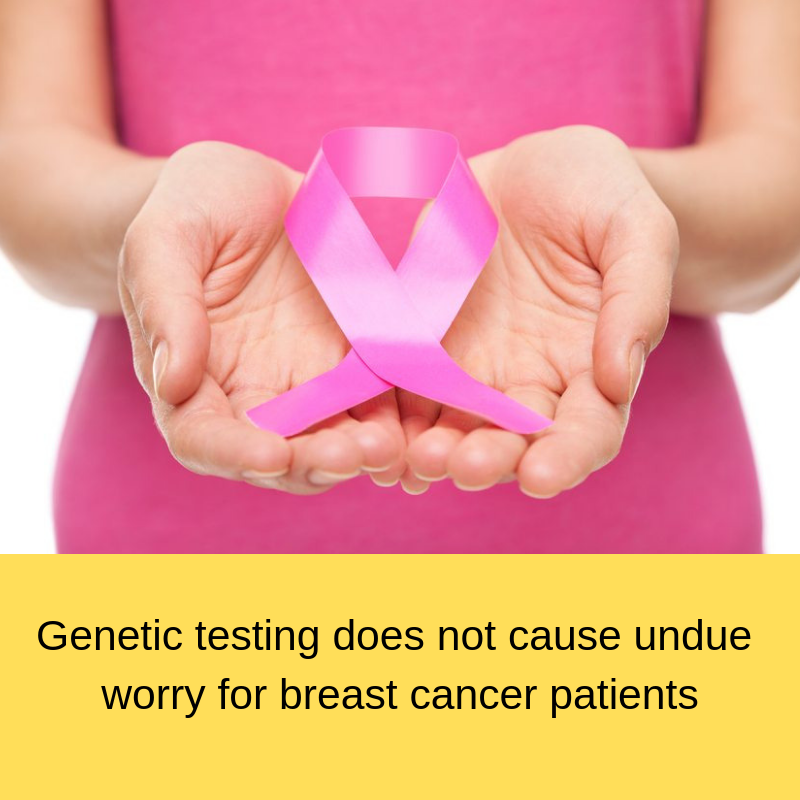
Genetic testing does not cause undue worry for breast cancer patients

"Genetic testing is getting to be progressively more complex, but progressively more exact. This has driven to a few ambiguities in test results. The challenge is joining this data into the treatment choice without causing unnecessary stress," researchers. Initially, genetic testing for breast cancer centered only on BRCA1 and BRCA2 genes. Presently, newer multigene panel tests search for abnormalities in a dozen or more diverse genes that play a few roles in breast cancer risk. By testing more genes, it's more likely a patient will have a positive test or a variant of unknown significance in other words, something is out of the ordinary but specialists don't know how that impacts cancer risk. The concern is that this greater variety seems lead patients to stress as well much about their chance of breast cancer recurrence when the genetic testing results are ambiguous.

Researchers studied 1,063 ladies treated for early stage breast cancer who had gotten genetic testing between the years 2013-2015, the period in which board testing became better known. Approximately 60 percent of the patients were tried only for BRCA1 and BRCA2, whereas 40 percent had the multigene panel test. Patients were inquired how much and how regularly they worried almost their cancer coming back and the impact that stress had on their life. Overall, 11 percent of patients detailed that cancer stress had a high impact on their life and 15 percent stressed regularly or nearly continuously. Neither the impact nor the recurrence of stress changed considerably based on the sort of genetic testing or the test results. The study is published in JCO Precision Oncology.

Researchers found that patients did not overreact whether they got the newer panel testing or BRCA-only testing, and they did not blow up to the test comes about. Their future cancer worry was not different whether they had a negative test or variation of unknown significance." Virtually all of the patients surveyed received a few forms of genetic counseling. "Genetic counseling is basic to maximize the benefit of testing for patients and their families," says Researchers. "But timely counseling after diagnosis of breast cancer is progressively a challenge since more patients are getting tested and the results are more complex."

Friday, 28 December 2018

Jackson-Weiss Syndrome

Jackson-Weiss disorder (JWS) is an uncommon hereditary disorder characterized by foot malformations (tarsal and metatarsal fusions; short, broad, medially deviated great toes) and in a few patients craniosynostosis with facial anomalies. Hands are normal in affected patients. This hereditary disorder can too in some cases cause mental inability and crossed eyes.

Causes
Mutations within the FGFR2 gene cause Jackson-Weiss disorder. This gene gives instructions for making a protein called fibroblast growth factor receptor 2. Among its different functions, this protein signals immature cells to become bone cells during embryonic development. A mutation in a particular portion of the FGFR2 gene overstimulates signaling by the FGFR2 protein, which promotes the untimely combination of cranium bones and influences the development of bones within the feet.

Signs/symptoms
At birth, the bones of the cranium are not joined together; they close up as the child develops. In Jackson-Weiss disorder, the cranium bones connect together (fuse) as well early. This is called "craniosynostosis." This causes:
1. Misshapen skull
2.Widely spaced eyes
3.Bulging forehead
4.The unusually flat, underdeveloped middle area of the face (midface hypoplasia)

Another distinctive group of birth defects in Jackson-Weiss disorder is on the feet:
1. The big toes are short and wide
2. The big toes also bend away from the other toes
3. The bones of some toes may be fused together (called "syndactyly") or abnormally shaped
4. Individuals with Jackson-Weiss syndrome usually have normal hands, normal intelligence, and a normal lifespan.

Diagnosis
Diagnosis of Jackson-Weiss disorder is based on the birth defects present. There are other disorders that include craniosynostoses, such as Crouzon disorder or Apert disorder, but the foot abnormalities help distinguish Jackson-Weiss disorder. If there's a question, a genetic test might be done to help confirm the conclusion. The determination of Jackson–Weiss disorder in a person suspected of having the condition is done by means of the following:
1. Genetic testing
2. Clinical presentation

Treatment

A few of the birth defects display in Jackson-Weiss disorder can be adjusted or reduced by surgery. Treatment of craniosynostosis and facial anomalies is usually treated by specialists and therapists who specialize in head and neck disorders. Treatment for Jackson–Weiss disorder can be done through surgery for a few facial features and feet.  Secondary complications such as hydrocephalus or cognitive impairment can be deflected by means of prompt surgery.

Friday, 21 December 2018

Congenital Anomalies

Congenital anomaly is one of the main causes of physical disabilities, stillbirths and neonatal deaths. Congenital anomalies, moreover commonly referred to as birth defects, congenital disorders, congenital malformations, or congenital variations from the norm, are conditions of prenatal origin that are displayed at birth, possibly affecting an infant's well-being, development and/or survival. Congenital inconsistencies shift significantly in severity. A few congenital irregularities are related to spontaneous abortion, stillbirth, or death within the early postnatal period. Congenital anomalies are a driving cause of death among new-born children around the world, and hereditary factors play a major part in most of the cases. One of the biggest hereditary studies to be carried out in children has fair revealed 14 new qualities responsible for the developmental disorder.

Causes and risk factors

There are approximately 50% of all inherent anomalies cannot be connected to a particular cause, there are a few known hereditary, environmental and other causes or risk factors. However, given that most developmental disorders are exceptionally uncommon; numerous more pathogenic variations stay unknown. The Deciphering Developmental Disorders (DDD) study aimed to recognize developmental disorders in children and utilize genomic advances to progress diagnosing.

Prevention

Preventive public wellbeing measures work to diminish the frequency of certain congenital anomalies through the removal of risk components or the reinforcement of protective components. Important preventions are:
<>ensuring adolescent girls and mothers have a healthy diet including a wide variety of vegetables and fruit, and maintain a healthy weight; avoid harmful substances, particularly alcohol and tobacco
<>also avoidance of travel by pregnant women (and sometimes women of child-bearing age) to regions experiencing outbreaks of infections known to be associated with congenital anomalies;
<>vaccination, especially against the rubella virus, for children and women and many more.

Detection

Health care before and around the time of conception (preconception and peri-conception) includes basic reproductive health practices, as well as medical genetic screening and counseling. Screening can be conducted during the 3 periods listed:
<> Preconception screening can be useful to distinguish those at risk for specific disorders or at risk of passing a disorder onto their children.
<>Peri-conception screening: maternal characteristics may increase risk, and screening results should be used to offer appropriate care, according to risk.
<> Neonatal screening incorporates clinical examination and screening for disorders of the blood, metabolism and hormone production.

Treatment and care

Many structural congenital anomalies can be adjusted with pediatric surgery and early treatment can be managed to children with functional problems such as thalassemia,  sickle cell disorders, and congenital hypothyroidism (diminished work of the thyroid).

Friday, 14 December 2018

The link between depression and genetic variants connected to higher body mass index suggests that obesity causes depression

People who are obese are more possible to possess depression than those who aren't, however it’s been unclear how one may cause the other. A study of the link between depression and genetic variants connected to higher body mass index suggests that obesity causes depression, and that it is the untoward psychological effects associated with obesity that drive the mood disorder. “These new findings are maybe the strongest up to now to counsel higher weights may actually contribute to depression,” Naveed Sattar, a professor of cardiovascular and medical sciences at the University of Glasgow who didn't participate within the work, tells The Guardian. “Of course, several alternative factors will cause depression, but, even so, weight loss may well be useful to boost mental state in some people, whereas keeping leaner normally should facilitate reduce probabilities of depression.”
To determine the direction of relation, researchers at the University of Exeter and the University of South Australia examined genetic information from the United Kingdom Biobank together with 48,791 people with depression and 291,995 without. They used genetic predisposition to the next body mass index (BMI) as a proxy for actual BMI (which they additionally had information on) to disentangle BMI and its relationship to depression from alternative factors that might confound the results.

The authors checked out 2 sorts of genetic variants and their relationship to depression: those who are related to higher BMI and conjointly joined to metabolic issues, like diabetes, and those that are joined to higher BMI however also are tied to a lower risk of metabolic issues. The researchers reasoned that if it were health problems attendant with fatness that were creating individuals depressed, instead of fatness itself, the genetic variants that didn’t carry any metabolic baggage wouldn't be related to depression. However, what they found was that the genetic variants joined with a lower metabolic risk conjointly correlate with depression.

Friday, 30 November 2018

Coffee or tea? Your preference may be written in your DNA

Modern research suggests that our DNA helps us to choose whether we lean toward coffee or tea. Analysts from the College of Queensland in Australia considered how our genes influenced our taste and why we like a few tastes more than others. Taking after investigating; analysts accept they know why a few of us incline toward coffee whereas others like tea more. The analysts found that individuals who like more bitter tastes are more likely to drink coffee. The analysts said they found something interesting in their research. Individuals who were more sensitive to the bitter taste of caffeine were more likely to incline toward coffee to tea.
Analysts looked at data on more than 400,000 men and ladies within the United Kingdom. They too looked at an Australian study that compared the tastes of 1,757 twins with their siblings. The analysts said genes aren't the only variables influencing people's tastes. Other things like our changing environment, social components or the impacts of taking medication can too turn us on or off coffee or tea.
In the new study, analysts inspected DNA variations of genes included in detecting the bitter taste of the chemicals caffeine, quinine — that severe taste in tonic water — and propylthiouracil, or PROP, a synthetic chemical not naturally found in food or drink. Other bitter components naturally in coffee and tea may trigger the same taste reactions as quinine and PROP do, Hayes says. Researchers in Australia, the United States, and England examined DNA from more than 400,000 members in the UK Biobank, a repository of hereditary information for medical research. Members too reported other data compared those scores to the people’s detailed beverage choices. People who had the highest genetic score for detecting caffeine’s bitterness were 20 percent more likely to be heavy coffee consumers, downing four or more mugs a day, than those without the increased sensitivity, the analysts calculate.
Analysts had thought that individuals who are hereditarily inclined to taste bitter more intensely might avoid bitter beverages.

“In this case, it’s unusual how they’re seeking caffeine,” says Researchers. In past studies that sought hereditary variations connected to coffee consumption, “taste genes did not come up.

Saturday, 24 November 2018

Genetic counselling

       If you're new here, have a look at our website. Thanks for visiting!
                                    https://humangenetics.geneticconferences.com/

Genetic counseling is the method of advising people and their families who are affected by or at risk of hereditary disorders. Also, it is a process to assist them to understand and adapt to the therapeutic, mental and familial suggestions of hereditary contributions to disease.
It involves talking about a genetic condition with a health professional who has qualifications in both genetics and counseling. Genetic Disorders caused by changes or mistakes in genes are inherited from one or both parents to their offspring.
The process integrates:
1. Analyze the family and medical histories to assess the chance of disease occurrence or recurrence
2. Education about genetics, it's testing, management, prevention
3. Counseling to promote the informed choices and adapt to the risk or condition.

Why might you need genetic counseling?
People affected with an inherited disorder or there might be a chance to get the inherited condition, they should consult Genetic Counselor as that will help them to understand more about the condition, what causes it and how they can adjust to it and plan for the better future.
Some of the genetic conditions (sometimes referred to as ‘hereditary disorders’) people talk to a genetic counselor about is: cystic fibrosis, Down syndrome, Fragile X syndrome, Huntington’s disease, cancer, diabetes etc.
The Genetic Counseling is different from the Genetic Testing as later involves tests which your doctor does to know about the symptoms or a family history of a genetic condition. The Genetic testing can only tell you about the likelihood and risk of your passing a genetic condition on to any children that you conceive.
Pregnant Women could do diagnostic tests as part of your pregnancy check-ups and scans, to find out if their baby has a genetic disorder. These tests include amniocentesis and chorionic villus sampling or CVS.

Role of Genetic Counselor
:
Genetic counselors are trained to advise you about:
·  The risk of developing specific types of Cancer-based on your     family history
·   Genetic tests that can give one more information about the risk of   certain types of cancer
·   The testing process, the limitations and accuracy of genetic tests
·  Emotional, psychological, and social consequences after knowing   the test results
·   Screening Cancer and monitoring options
·   Cancer prevention
·    Diagnostic and treatment options
·    The privacy of your genetic information
·    Talking with family members about cancer risk


Sunday, 18 November 2018

Gene Mutation: The Hair loss

                        If you're new here, have a look at our website. Thanks for visiting!
                                https://humangenetics.geneticconferences.com/

Researchers have identified a new gene which is involved in hair growth and also found the gene mutation which is responsible for hypotrichosis simplex, a hereditary hair loss disorder which is affecting people nowadays. The disorder causes hair follicle miniaturization, a process in which hair follicles shrink and narrow, and thick hair is supplanted by fine, downy "peach fuzz" hair. This discovery may affect the future researches and treatments for the male pattern baldness and other forms of hair loss.

The identification of this gene basic hereditary hypotrichosis simplex has managed us an opportunity to gain understanding into the method of hair follicle miniaturization, which is most commonly watched in male pattern hair loss or androgenetic alopecia. It is important to note that whereas these two conditions share the same physiologic process, the gene researchers found for genetic hypotrichosis does not clarify the complex process of male pattern hair loss.

The team researchers made their data by analyzing genetic data from few families and from countries like Pakistan and Italy who have hereditary hypotrichosis simplex. After analysis they found a common mutation in the APCDD1 gene, which is found in a particular region on chromosome 18 that has been appeared in past studies to be involved in other shapes of hair loss, counting androgenetic alopecia and alopecia areata, implying at a broader part in hair follicle biology.

Importantly, the analysts found that APCDD1 inhibits a signaling pathway that has long been appeared to control hair development in mouse models but has not been broadly connected to human hair development. Laboratory researchers have focused on this pathway, known as the Wnt signaling pathway, to turn on or off hair development in mice, but, until presently, the pathway did not show up to be included in human hair loss. This finding is significant since it gives evidence that hair growth patterns in people and in mice are more similar than already accepted.


These findings suggest that manipulating the Wnt pathway may have an effect on hair follicle growth for the first time, in humans And unlike commonly available treatments for hair loss that involve blocking hormonal pathways. They are now working to understand the complex genetic causes of other forms of hair loss including alopecia areata, with the hope of eventually developing new, effective treatments for these conditions.

Saturday, 10 November 2018

Blue-eyed humans have a single, common ancestor


New research reveals that people with blue eyes have (single) common ancestor. Previously we all had brown eyes, but a genetic mutation affecting the OCA2 gene in our chromosomes resulted in the creation of a 'switch,' which literally turned off the ability to produce brown eyes.


The OCA2 gene codes for the P protein, which is involved in the production of melanin pigment that gives color to our hair, eyes, and skin. The "switch," which is found within the gene adjacent to OCA2, however does not, turn off the gene totally, but rather limits its action to lessening the production of melanin within the iris successfully i.e; "diluting" brown eyes to blue. The switch's impact on OCA2 is exceptionally specific.

In addition to having significantly less melanin in their iris than people with brown eyes, hazel eyes or green eyes, blue-eyed individuals have only a little degree of variation in their genetic coding for melanin production. Brown-eyed people, on the other hand, have significant individual variation within the area of their DNA that controls melanin production. From this, the researchers conclude that all blue-eyed individuals are linked to the same ancestors and they all have inherited the same switch at exactly the same spot in their DNA.
The color of our eyes depends on the amount of melanin is present in the iris. There's only brown color within the eye — there's no hazel shade or green shade or blue color. Brown eyes have the highest amount of melanin within the iris, and blue eyes have the slightest.


Risks Associated With Blue Eyes
As blue eyes contain less melanin as compared to hazel, brown and green eyes they are more susceptible to damage from UV and blue light because melanin in the iris protects the back of the eye from the damage caused by UV radiation and high-energy visible ("blue") light from sunlight and artificial sources of these rays.
Research has shown that blue eye colour is associated with a greater risk of age-related macular degeneration (AMD) and a rare but potentially deadly form of eye cancer called uveal melanoma.
For these reasons, people with blue eyes should be more cautious regarding their exposure to sunlight.


Saturday, 3 November 2018

Freckles and Genetics


A few individuals are more likely to urge freckles than others, depending on their genes and skin type. If a person is hereditarily more likely to develop freckles, exposure to daylight can make them appear. Freckles are common in children and may vanish or ended up less noticeable as they grow up.

Causes
Freckles show up when melanin, the pigment that gives skin its color, builds up beneath the skin. Freckles may look brown, red, or tan. Sun exposure and hereditary factors make some people more likely to create freckles.

1. Sun exposure:
A person's skin cells produce additional melanin to protect the skin from sun damage. This is why freckles tend to seem after sun exposure. Freckles can show up over a large area of skin and can reappear or become darker within the summer months. Spots regularly fade or vanish within the winter months, when new skin cells replace old cells. Freckles develop on areas often uncovered to daylight, such as the: face, arms, neck, back, chest

2. Genetics
Genetics moreover play a leading role in who is more likely to develop freckles based on which type of melanin their body produces. The body can produce two sorts of melanin called pheomelanin and eumelanin. Eumelanin ensures the skin from UV beams, but pheomelanin does not. The type of melanin the body produces depends on a gene called MC1R. People with dim hair, eyes, and skin usually deliver mostly eumelanin and are less likely to create freckles. People with red, blonde, or light brown hair and who have light-colored skin and eyes usually deliver mainly pheomelanin and are more likely to develop freckles.

Freckles are not dangerous. However, as individuals with freckles have skin that's more touchy to daylight, they should take additional care to protect their skin from the sun. Freckles can look very comparable to other marks that develop on the skin. For example, they can look like sun spots, moreover known as age spots, or liver spots. Sun exposure could be an essential cause of both spots and age spots. Age spots are ordinarily bigger than freckles, are more clearly characterized, and tend to seem in older adults.

Saturday, 20 October 2018

Could we use gene mutations to treat diabetes and heart disease?

                              
Researchers say they have found a gene mutation that moderates the metabolism of sugar within the intestine, giving individuals who have the mutation a distinct advantage over those who don't. 
Those with the mutation have a lower chance of diabetes, obesity, heart failure, and even death. The analysts say their finding may give the basis for drug therapies that could imitate the workings of this gene mutation, offering a potential advantage for the millions of individuals who endure with diabetes, heart disease, and obesity.

The study shows that individuals who have the characteristic gene mutation have an advantage when it comes to diet. Those who eat a high-carbohydrate diet and have this mutation will retain less glucose than those without the mutation. A high-carbohydrate diet includes such foods as pasta, bread, cookies, and sugar-sweetened beverages. Researchers said that they're excited about this study since it helps them to clarify the interface between what we eat, what we absorb, and our chance for disease. Knowing this opens the door to improved treatments for the cardiometabolic disease.

During the study, the analysts examined the relationship between SGLT-1 mutations and cardiometabolic disease using genetic data gotten from 8,478 participants in the Atherosclerosis Risk in Communities (ARIC) study. The analysts found that almost 6 percentages of the subjects carried a mutation in SGLT-1 that causes limited impairment of glucose absorption. People with this change had a lower incidence of type 2 diabetes, were less obese, had a lower rate of heart failure, and had a lower mortality rate when compared to those without the mutation, indeed after adjusting for dietary intake.

Based on these discoveries, the researchers recommend that specifically blocking the SGLT-1 receptor could provide a way to slow down glucose uptake to anticipate or treat cardiometabolic disease and its consequences.

Friday, 12 October 2018

Genetic Disorder: Neurofibromatosis


If you're new here, have a look at our website. Thanks for visiting!
                      https://humangenetics.geneticconferences.com/


Neurofibromatosis is a rare genetic Disorder in the nervous system. In this case, benign tumors grow in the nerves and in other parts of the body which affect the growth and development of nerve cell tissue. Sometimes people with this disorder affected profoundly whereas some could barely notice the neurological problems. In this disorder is a group of three disorder in which the tumors grow in the nervous system. The three types are neurofibromatosis type 1 (NF1), type 2 (NF2) neurofibromatosis and Schwannomatosis. Neurofibromas that occur on or under the skin, sometimes even deep within the body; these are benign (harmless) tumors; however, in rare cases, they can turn malignant or cancerous.

Causes:
Neurofibromatosis is often inherited (passed on by family individuals through our genes), but around 50% of individuals recently analyzed with the disorder have no family history of the condition, which can emerge spontaneously through a mutation in the genes. Once this change has taken place, the mutant gene can be passed on to future eras.

Symptoms:
<>In NF1 side effects include light brown spots on the skin, freckles within the armpit and crotch, small bumps inside nerves, and scoliosis.
<>Tiny growths in the iris (colored area) of the eye; these are called Lisch nodules and usually do not affect eyesight.
<>Bone deformities, including a twisted spine (scoliosis) or bowed legs
Tumors along the optic nerve, which may cause eyesight problems
<>In NF2 there may be hearing loss, cataracts at a youthful age, balance issues, flesh-colored skin flaps, and muscle wasting.
<>The tumors are generally non-cancerous.
<>In schwannomatosis isn't well-understood it is estimated that 85 percent of cases have no known cause (“spontaneous”) and 15 percent are acquired.

Diagnosis:
<>Neurofibromatosis is diagnosed using a number of tests, including:
<>Physical examination
<>Medical history
<>Family history
<>X-rays
<>Computerized tomography (CT) scans
<>Magnetic resonance imaging (MRI)
<>Biopsy of neurofibromas
<>Eye tests
<>Tests for particular symptoms, such as hearing or balance tests
<>Genetic testing

Friday, 5 October 2018

Human genetic variation


Human genetic variation is the hereditary contrasts in and among populations. There may be multiple variations of any given gene within the human population (alleles), a situation called polymorphism. No two people are hereditarily identical. Indeed monozygotic twins (who create from one zygote) have occasional hereditary differences due to transformations occurring during development and gene copy-number variation. Differences between people, indeed closely related individuals, are the key to strategies such as genetic fingerprinting. The study of human genetic variation has developmental significance and therapeutic applications. It can help researchers get it ancient human populace migrations as well as how human groups are naturally related to one another. For medication, think about of human genetic variation may be vital since a few disease-causing alleles happen more frequently in individuals from particular geographic districts. Modern discoveries appear that each human has an average of 60 new mutations compared to their parents.

Causes of variation

Causes of differences between individuals include independent assortment, the exchange of genes (crossing over and recombination) during reproduction (through meiosis) and different mutational events. There are at least three reasons why hereditary variety exists between populations. The natural choice may confer an adaptive advantage to people in a particular environment if an allele provides a competitive advantage. Alleles under selection are likely to occur only in those geographic districts where they confer an advantage. A second important process is a genetic drift, which is the impact of irregular changes within the gene pool, under conditions where most mutations are natural (that is, they do not appear to have any positive or negative selective impact on the organism). Finally, little migrant populaces have statistical differences—call the founder effect—from the overall populaces where they originated; when these vagrants settle new zones, their descendant populace typically varies from their population of origin.

What Is the Significance of Human Genetic Variation?

Nearly all human genetic variation is generally insignificant biologically; that is, it has no adaptive importance. A few variations (for example, a neutral transformation) modify the amino acid sequence of the resulting protein but produce no detectable change in its work. Other variation (for the case, a silent transformation) does not indeed change the amino acid sequence.


Friday, 21 September 2018

Population genetics

Population genetics looks to understand how and why the frequencies of alleles and genotypes alter over time inside and between populations. It is the branch of science that gives the most profound and clearest understanding of how developmental alter happens. Population genetics is especially relevant nowadays within the growing journey to get it the basis for genetic variation in susceptibility to complex diseases. Population hereditary qualities are personally bound up with the study of advancement and natural selection and are regularly respected as the hypothetical cornerstone of cutting-edge Darwinism. This is because the natural selection is one of the foremost vital components that can influence a population's hereditary composition. Natural determination happens when a few variants in a population out-reproduce other variants as a result of being better adjusted to the environment, or ‘fitter’. 
Assuming the fitness differences are at least mostly due to hereditary differences, this will cause the population's hereditary makeup to be changed over time. 

By considering formal models of gene frequency alter, the developmental Process and
to allow the results of distinctive developmental hypotheses to be investigated in a quantitatively precise way.

Advances in molecular science have created an enormous supply of information on the hereditary inconstancy of genuine populations, which has empowered a link to be forged between unique population-genetic models and observational data. The status of populace hereditary qualities in modern science is an interesting issue. In spite of its centrality to evolutionary hypothesis, and its historical significance, populace hereditary qualities aren’t without its critics. Population-genetic models of advancement have too been censured on the grounds that few phenotypic characteristics are controlled by genotype at a single locus, or indeed two or three loci. 


In spite of the criticisms leveled against it, populace genetics has had a major impact on our understanding of how evolution works.

Friday, 7 September 2018

Lithium: a key to the genetics of bipolar disorder

Lithium is a decades-old treatment for bipolar disorder, profoundly effective in those who react. It comes with a few side effects, and lithium has been superseded in huge part by newer mood stabilizers. But lithium’s effectiveness in the one-third of bipolar patients who react to the medicate compares favorably with the newer medications. Neglect of this reasonable medicine implies bipolar patients who could be helped never get a chance to encounter its benefit.
Until now, analysts have not caught on why these patients have not reacted to the common treatment, whereas others have reacted well to the drug. Now as the universal Consortium on Lithium Genetics, the bunch has considered the underlying hereditary qualities of more than 2500 patients treated with lithium for bipolar disorder. Researchers found that patients clinically analyzed with bipolar disorder who showed a poor reaction to lithium treatment all shared something in common: a high number of genes already recognized for schizophrenia, This doesn't prove
that the patient too had schizophrenia -- but in case a bipolar patient features a high 'gene load' of schizophrenia hazard genes, our research appears they are less likely to reply to mood stabilizers such as lithium. In addition, researchers identified new genes within the immune system that will play a vital biological part within the underlying pathways of lithium and its effect on treatment response.
Clinical studies have appeared as well that the treatment reaction and result show up to be particular for the different types of mood stabilizers. Patients who react to lithium display qualitative contrasts with patients reacting to other medicines, such as valproate, carbamazepine or lamotrigine. Reactions to carbamazepine had atypical clinical highlights, such as mood-incongruent psychosis, an age at onset of illness below 30 years old, and a negative family history of mood disorders. Additionally, in a study comparing the phenotypic spectra in responders to lithium versus lamotrigine, the probands contrasted with regard to the clinical course (with rapid cycling and non-episodic course within the lamotrigine gather) and co-morbidity, with the lamotrigine-responder group appearing a better recurrence of panic attacks and substance abuse.

In conclusion, pharmacogenetic studies may give important clues to the nature of bipolar disorder and the response to long-term treatment.

Sunday, 2 September 2018

New Gene Therapy Can Restore Hand Function after Spinal Cord Injury

New gene therapy can possibly offer assistance to individuals with spinal cord wounds to re-learn skilled hand movements, reports a new study. The discoveries of the study are published in the journal Brain. People with spinal line damage frequently lose the capacity to perform ordinary activities that require coordinated hand developments such as writing, holding a toothbrush or picking up a drink. ‘New gene therapy can restore hand work after spinal cord harm by causing cells to deliver a chemical called chondroitinase which can break down the scar tissue and permit networks of nerve cells to regenerate.’
In the study, the researchers tried the modern gene treatment on rats for regenerating harmed tissue in the spinal cord that can be switched on and off employing a common antibiotic. "Gene therapy provides a way of treating expansive zones of the spinal cord with only one injection, and with the switch, we can presently turn the gene off when it is now not required," Researchers added.
After a traumatic spinal injury, thick scar tissue forms which prevent new connections being made between nerve cells. The gene therapy causes cells to deliver a chemical called chondroitinase which can break down the scar tissue and permit systems of nerve cells to regenerate.
The researchers gave the gene therapy to rats with spinal injuries that closely imitated the kind of human spinal injuries that happen after traumatic impacts such as car crashes or falls. "We found that when the gene therapy was switched on for two months, the rats were able to precisely reach and grasp sugar pellets," explained by researchers. "We moreover found a sensational increase in activity within the spinal cord of the rats, recommending that new connections had been made within the networks of nerve cells," she noted.

However, the researchers had to overcome an issue with the immune system recognizing and expelling the quality switch mechanism. To get around this, they added a "stealth quality" which hides the gene switch from the immune system. The gene therapy isn't however prepared for human trials, the researchers said.

Friday, 24 August 2018

Doctors Successfully Treat Rare Genetic Disorder in Utero

The Hypohidrotic Ectodermal Dysplasia, is also known as “Anhidrotic Ectodermal Dysplasia” and “Christ-Siemens-Touraine Syndrome”. It is one of about 150 types of ectodermal dysplasia in Humans which leaves patients unable to produce sweat, which can be life-threatening.
It is a genetic disease and before birth, this disorder shows abnormal development of structures including skin, hair, teeth, nails and sweat glands and most people with this disorder have a reduced ability to sweat (hypohidrosis) because they have very fewer sweat gland as compared to normal which do not function properly.
The disease, X-linked hypohidrotic ectodermal dysplasia (XLHED), influences around 1 in 17,000 individuals around the world. Patients with XLHED carry a mutant gene that anticipates the production of a certain protein, called ectodysplasin A. Missing this protein causes abnormal development and the decreased capacity to sweat (called hypohidrosis) can lead to unsafe overheating, causing possibly life-threatening health issues.
After the successful test in mice, specialists treated a pair of twins and a third infant diagnosticate with XLHED with a recombinant protein whereas the babies were still in utero. They treated the twins with the protein twice, at weeks 26 and 31 of pregnancy, and treated the third child at week 26 only. In spite of the fact that the treatment may have driven to the premature birth of the twins at 33 weeks, it too appears to have been effective in all three cases. After 22 months of postnatal follow-up, the three newborn children were able to deliver sweat normally and had not developed XLHED-related indications.
Affected people show sparse scalp and body hair (hypotrichosis). The hair is frequently light-colored, delicate, and slow-growing. These symptoms additionally include absent teeth (hypodontia) or teeth that are malformed. The teeth that are present are habitually little and pointed.

While the treatment isn’t completely curative, the foremost life-threatening aspect of the disease was effectively addressed. Long-term follow-ups are required to ensure that the positive impacts last all through the patients’ lifetimes in which there are no long-term side effects for the mothers.